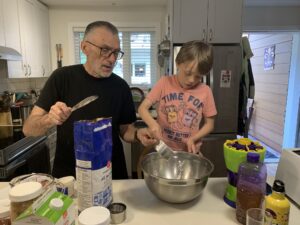
Eating a Healthy Plant Based Diet, featuring Vesanto Melina, MS, Registered Dietitian, and lead author of the Academy of Nutrition and Dietetics’ position paper on Vegetarian Diets. This online presentation was organized by Kirk Grayson in the Maple Ridge area of BC.
Eating a Healthy Plant Based Diet. Optimal Nutrition
Kirk Grayson
Welcome, everybody, and welcome to tonight's presentation on eating a healthy plant-based diet. My name is Kirk Grayson, and I am a long-time resident of Maple Ridge. I've lived here for almost 30 years. But over the last couple of years, I've become more interested in issues, topics relating to sustainability. And about a year ago, I started a local chapter of Green Drinks, where people from our community with an interest in sustainability can just kind of get together and network and inspire one another. And although tonight's presentation is not formally affiliated with Green Drinks, out of many of the conversations that we had over the last year, I realized that people in our community were very interested in the topic of eating a plant-based diet. I mean, particularly from a sustainability perspective, we know that factory farming of animals, especially cattle and sheep, is a major contributor to greenhouse gases. Moving to a plant-based diet, at least, increasing the number of plant-based meals we eat in a week helps to reduce emissions from that sector. And Vesanto is going to be talking a little bit more about that tonight. But many of us are not well informed about what it takes to eat a healthy, balanced diet that relies on plants. So I thought it would be really helpful for us to hear from someone who's trained and knowledgeable about the nutritional aspects of eating a plant-based diet. And a friend told me about Vesanto, but before I introduce Vesanto, for those of you who don't know her, I'd like to acknowledge that we are speaking tonight from the unceded territory of the Katzie and Kwantlen First Nations. And I'd also like to thank the Vancouver Foundation and the City of Maple Ridge for making this evening possible through the Response of neighborhoods Small Grants Program. So we're so fortunate to have Vesanto Malini with us tonight. Vesanto is a registered dietitian who speaks all over the world on this topic. In fact, when I was doing some research on her, I looked at her websites and I was really, I was amazed to see what her calendar of events that she was attending and speaking at covered just in 2019 alone, right up until the moment of COVID, I think she was stomping around the world stage. So we're pretty, I'm very excited to have her here tonight. Vasanta was the co-author of books that have won awards in the US and Canada and that have received star rating by the American Library Association as the go-to books on plant-based nutrition. And they're now translated into 14 different languages. Her books include Becoming Vegan, the Comprehensive and Express Editions, and the KICK Diabetes Cookbook with dietitian Brenda Davis. Vesanto has taught nutrition at the University of British Columbia and at Seattle's Bastyr University, and she's a government consultant and is the lead author of the Academy of Nutrition and Dietetics' current position paper on vegetarian diets. Vesanto lives right here in Vancouver, so we have this plant-based diet superstar right in our backyard.
Vesanto Melina
I'm really happy to be talking with you all about this topic and your balance of where you're at in terms of dietary choice is really reflective of the culture we live in. I mean, sometimes people have called this Veg-couver, you know, where we are, but we're really people are shifting towards more plant-based and really seeing the health benefits, the environmental benefits, and sometimes it's related to animals. So we want to do it in really, really optimal health. And that's what I like to help people, both as clients and in presentations. My websites are shown here. There's three of them. NutriSpeak, my main one, becomingvegan.ca and the Kick Diabetes Cookbook. The most recent book was on type 2 diabetes. So I have actually been a dietitian for a long time, 53 years. I'm 78, and I have gone through a real evolution as our country has and as our food guide has in terms of thinking. And this is actually quite a help for me when I'm working with different people or understanding where we are because I, of course, started out on the standard North American diet and what my mother thought was pretty healthy. And I also have been a dietitian through these different changes. I started being a dietitian in 1965. I was teaching at UBC. And we were thinking about nutrition so differently then. We thought vegan was a really scary thing that few people should adopt. And vegetarian, that was tied in with sandals and not shaving your legs and all kinds of things like that. And our food guide was quite different in that from the 70s to the 90s. And so when you look at this food guide, Canada's food guide, which some of you probably saw when you went to school, what do you notice about the layout of the whole page? For example, What about the placement of the food groups? What do you see here? The size of the food groups. So half the page is, for example, milk and milk products and meat and alternates. Are there options for dairy? Now, we're a very multicultural country and our province as well. And we find that 70% of the world's population has some degree of lactose intolerance or lactase insufficiency. They don't digest milk products very well. And also Indigenous people, like that wasn't a part of people's diets normally. And yet we had a food guide that could almost be considered racist because it required that. And that was a way of consuming that was common in Northern Europe and certain parts of the Mediterranean, but it wasn't a food guide that was typical for Asia, for Indigenous people. So this way of thinking has gradually evolved over time. And also, if you look at the meat group, we have alternatives at least mentioned here, but look at the size of the different things. The chicken, the egg, the little piece of veal or whatever it is, those are fairly big, the fish and the beans are just a light scattering. Now, if we come to the food guide that we have now, see how things have changed. And we find that we've had a real evolution. We've had a lot of health problems in our culture where the medical system supports us in terms of chronic disease, it gets really expensive if people up their risk of type 2 diabetes or cardiovascular disease or cancer. And we find that we want our national food guide to minimize our risk of chronic disease. And that was one of the impetuses. Actually, they used our Becoming Vegan comprehensive book also as a resource in the part of the evolution Health Canada did. But you'll find that, look at the number of vegetables and fruits. I don't know if you remember from the last food guide, that was 1/4 of the page and it was stuck way down at the bottom. And there were grains. Now we've got an emphasis on whole grains. And then we don't even have a meat group and a milk group. We have protein foods. And that includes some that are animal products and some that are not animal products. And it allows some flexibility here. So there has been a real change, including in the name of that food group. And you see that the vegetables and fruits have taken on much more priority. And what beverage has replaced milk and juice? It's water now. So this is just how things have changed. This food bag came out in 2019. And some of the resources that were used in developing materials like this were some big studies. One of them in Oxford, England, centred in England, but it went across the British Isles in terms of participants. And another big one was the Adventist Health Study, which was across North America. And they followed 71,000 people over decades and watched what happened to them in terms of health. And the Adventists tend to be pretty health-conscious people. Even the meat eaters were sometimes only eating meat once a month or once a week. They weren't eating a lot of meat. There were fish eaters, there were vegetarians, and there were vegans. And yet they all didn't smoke, and they didn't drink alcohol. Some might have once in a while a little bit, but it wasn't a part of the culture really. And they get exercise. So these were health conscious people. And the main difference from one group to the other was whether their dietary choice. And they found with these Adventists, so these are North Americans, they actually had pretty good compliance with the dietary goals for being healthy, and they had few inadequate intakes. What they found in terms of health was that the entirely plant-based diets were most protective against cardiovascular disease, type 2 diabetes, and other conditions, including cancer, so that When you went more plant-based, the lacto ovo where they used eggs and dairy were somewhat protective. The more plant-based were most protective. They also found out that vegans must use supplements for vitamin B12 and for iodine. And so we'll be looking at these nutrients a little later. This is a rather complicated looking slide. But I'll show you what we want to see here. This is looking at the three dietary patterns and some of the results from these big Adventist Health Study and the Epic Oxford Study. And the green lines show the risk factors for those on vegan diets. And the red lines show the risk factor, which is set at one, that's the standard, for the meat eaters. And the blue line is those lacto-ovo who consume milk, lacto, and ovo eggs as well. And what we find is, for example, in terms of mortality, that that means how long you live, that the vegans tend to live the longest. They ended up with seven or eight more years of life and often a more healthful last decade or so of life. Next is CVD or cardiovascular disease. And they grouped the vegans and vegetarians in this particular study, but they found that you dropped your risk by about a third when you consumed a more plant-based diet. Hypertension, huge impact. And we find that you can drop your risk of high blood pressure, hypertension, by 75% by going plant-based. And I know that my husband actually had hypertension early on and that's a long, long gone situation now. Diabetes, type 2 diabetes, we find again, we've got this huge drop as you go more plant-based. In fact, you can actually reverse type 2 diabetes. And I've had a number of clients that have done that very successfully. And next is cancers. We don't have quite as stunning results there, but certain cancers like bowel cancer and prostate cancer, you can drop your risk a lot. Cancer is pretty multi-causative, as these diseases tend to be. Diverticular disease, another drop in risk, kidney disease, and cataracts. So these are from really big studies where they followed in the Epic Oxford, 60,000 people over decades and saw what happened to them. And in the Adventist study, over 70,000 people that were all health-conscious people. But the main difference was the dietary pattern. Next, I happen to be actually the lead author of this position paper. It's the American Academy of Nutrition and Dietetics, their position statement. So remember that in the 70s, and even when I was in university and teaching university, we were pretty skeptical about whether you could go plant-based and do it in good health. But now we've got very strong evidence that appropriately planned vegetarian, including vegan diets, are healthful, nutritionally adequate, and may provide health benefits in the prevention and treatment of certain diseases. And another strong statement here that's valuable for health professionals and for those who are thinking about bringing up their family in a more plant-based diet, that these diets are appropriate for all stages of the life cycle. including when we have the biggest nutritional stresses, pregnancy, lactation, infancy, childhood, adolescence, older adulthood, and for athletes, we're finding superstar athletes on all sorts of dietary patterns. So this position paper is used around the world and gives very strong evidence. It's actually one of the hardest things I ever worked on because we have peer reviews that are just critical of every word that are well-versed in science. So you can't say anything without it being very well backed up. So the nutrients to consider that we're going to go over here are protein, and along with that, because the foods tend to be similar, iron and zinc, also for bone health and other health aspects of health, calcium and vitamin D, vitamin B12, omega-3s and iodine. So these are the ones that we'll look at on plant-based diets. So protein, that's the first one that comes up for everybody. People all wonder, you know, what is, you know, where do you get your protein? And it's funny because here we have a good example. There are all kinds of deer and moose and calves and cows and just all kinds of animals that are entirely vegetarian, or they might get an occasional bug once in a while. And they have strong muscles, strong bones, works perfectly well. And we find that, in fact, protein and all the essential amino acids actually come from plants, either directly or indirectly. So the animals that provide, in some diets, meat contain amino acids, but those amino acids actually originated in plants. Now, looking at how much protein we need a day, because of course this has been in considerable interest to nutritional scientists, we need at least 10% of our calories to come from protein. And it can be a little bit higher. I like it to be a bit higher when I see clients or in our books. We make sure we have an edge there above that. But it works out to typically, it's in terms of grams per kilogram body weight, we find that People need about 46 to 62 grams of protein, depending on their body size. So this is just something to keep in mind. Maybe you think 45 to 70, 46 to 62, somewhere in that range. Another way of looking at the protein is the percentage of calories. So we can either look at the grams or the percentage calories. And the percentage calories would be when the calories are sufficient in the whole diet. So in the Adventist Health Study, look at what percentages they found. The meat eaters, 14.9%, and those on plant-based diets, 14.1%, so not much difference. And in terms of grams, they were both above these target ranges for all of the different diets, slightly higher in the meat eaters. So if you think what foods provide protein on plant-based diets, just think what you would think of. Where are you going to get your protein? So what we find is that if you want, say your target is 10% of the calories to come from protein, Grains, which actually provide protein to most of the world's population, about half the world's protein actually comes from grains. It's around 7 to 17%. So some grains like wheat are more at the high end of the range. Some rices are at the low end of the range. And so then it's really important to have some other foods that are a bit higher to top that up. When we look at nuts and seeds, nuts are a bit lower than seeds. Seeds can be quite significantly high. And hemp seeds, for example, are at the high end of the seed range. So they can top up your protein intake. Then legumes, and this word refers to beans, peas, lentils. On the prairies, sometimes they consider it pulses, so those are the other words, and it includes soy foods. So these are the real heavy hitters for the protein. When we're looking at meats, they're in the same range as legumes. A difference between meat and the legumes is that in legumes, you get a lot of fiber, you get some carbohydrates, which is very well mixed with the fiber. So you get a kind of slow delivery of energy. But you don't get much fat, typically. Whereas with meat, you get protein, and then the whole rest, above 40%, is fat. So there's quite a difference here. But these are the strong protein providers in this food group. And then with vegetables, they can also be quite high. Like greens are they can be up to 40% calories from protein. But you've got to eat a whole wheelbarrow full of greens to get, because the calories are low. So the starchy vegetables are at the low end, but vegetables can be significant contributors. And I have done a couple of books on raw foods where I had to learn a lot about this. And when people eat really big salads, which some of them do, and that's what they're really relying on, the protein can really add up. The one group that is typically quite low is fruits. So the places that I found people's protein intakes were low tended to be either people who were anorexic or not getting enough calories, and also people who were eating a fruitarian diet, which a few people have chosen to do. And it's not a wise move to have like 75 percent of your calories coming from fruits because of the protein, it's just really tricky to get it up high enough. So if you want somewhere in the range, remember we said 46 to 60 to 64 grams of protein a day. Here are some examples of where you'd get 15 grams of protein. And that would be about the amount in a medium-sized burger patty, meat burger. So if you think of that as I'm kind of thinking of a portion. If you have a cup of any kind of cooked beans or lentils, if you have 3/4 of a cup of hummus or some edamame, pumpkin seeds. So then we start thinking, okay, well, when I have snacks, rather than having a bag of chips, it's really good to have like a trail mix with me in my backpack or in my car, whatever, in my desk. If you want to have a little bit of a protein boost through the day. Broccoli and kale can be big providers of protein, but you eat significant amounts. Tofu, just half a cup, or tempeh, these soy foods, they're quite protein-dense foods. And another idea that people put in their smoothies is pea protein. Brendan Brazier, who developed the Vega line, is somebody from Vancouver, actually, originally. And then you can also have grains as good providers or quinoa or peas. So these are just some different options. I really enjoy gardening and have been growing lots of beans lately and peas. And one of the aspects of gardening I like is just marveling at what nature does. But legumes, these beans, peas, lentils, they have tremendous help in getting nitrogen, which is a key part of amino acids, from the air. The air gets into the soil, and they can incorporate it into amino acids. And there are little nodules on the root of the legume, the beans, peas, lentils. And then that can start the building of amino acids and it ends up in the peas that are in the pod or whatever legume, bean, pea, lentil we're eating. So this is the way we get nitrogen. Like we are breathing nitrogen all the time, but we don't get amino acids out of it. We can't do this, but these legumes can. The legumes have these root nodules, which have nitrogen-fixing bacteria on them. So the nitrogen from the air goes into the soil, and the fixing bacteria do their work. And then the compounds they produce are carried to the plant parts. And so it's a real miracle of nature. If you're digging up, I think Kirk was digging up some beans the other days. Anyway, there are these little nodules. So here are three legume roots and you can look at these and see what you think. You see they're little bumps, small in one case or two cases and a bit bigger in another. What legumes do you think these are? Just have a look here and I'll click it on. So one of them is peas, one is chickpeas, and the other is soybeans. You can see they're quite significant root nodules there. So this is our amazing nature. We're so blessed to have, you know, the gardening options we have in British Columbia here. And just looking at a comparison of ground beef or tofu, say if we have a patty of ground beef, which would be 3 ounces, that's about the size of a deck of cards, which has 22 grams of protein, this particular one. or we can have tofu and have just over half a cup, we see that it's a very similar delivery of protein, slightly fewer calories with the tofu. And when people think about tofu, they sometimes go, Yeah, but I wouldn't like to eat that. But tofu is just like, if you considered eating raw chicken leg or something like that. You've got to do something to make it taste good. And so it's really important to learn some good recipes. We've got one of our books is called Cooking Vegetarian or Cooking Vegan. And by the way, these are all in the libraries, which are, thank goodness, starting to open up now. And they're in bookstores and stuff. But it's really good to learn some wonderful, wonderful ways to prepare tofu, because then it becomes quite delicious. So our research that has been done now has clearly established that protein requirements, including those of bodybuilders and athletes are met entirely by plant-based diets. And people, there's all kinds of, if you search on the internet, you can see pretty well every sport, ultimate fighters, kayakers that are in competition, just all kinds of different athletes have gone plant-based and found that their endurance and their health was way up there. I was in Nashville a while ago and found that the Titans had actually, because one of them had gone vegan and his wife was a really good chef. Their team, when I was in Nashville, was subsisting on protein foods. And so it's been spreading to all kinds of less likely realms to eat more plant-based diets. And of course, people found they could maintain their weight better where they wanted it to be. Now, so legumes have a lot of choices. Sometimes people just think, I had beans. My mom used to make them. They didn't taste that great. But there are really a lot of options. And of course, one of the things, I didn't put a slide in this, but there's a website called happycow.net. And as restaurants start to open up, you can find some restaurants in your area that have more plant-based options. That's happycow.net. And you can explore some different things that way as we start to connect with people. And of course, now you can start to look on the internet and find all kinds of wonderful recipes. I think a lot of us, even in COVID, are having a lot of fun exploring our cooking options. So here's a little quiz for you, which I don't know if you've got any paper handy or something to write on or just even if there's another person there, you can chat with them. But how many legumes, pulses, beans, peas, lentils can you name? And think of different colors like black, white, red, spotted. Just you probably wouldn't have thought that there were 20. but there actually are. So it's good to just see what, think of some favorites, some stretch yourself a little bit and try and think of ones that you're familiar with. And then I'll show you the next slide. See if you can do a few pulses. Okay, so here we go. with the next, that garbanzo beans, chickpeas are one, pinto, black, a real favorite, kidney, lima, cannellini, navy, white, red, aduki, mung, the ones that I've got italicized can also be eaten raw if they're sprouted, fava beans or broad beans, green wax, peas and snow peas, black-eyed peas, lentils, and there's all kinds of different lentils, big, little, red, brown, gray. And so if there were ways that you didn't like beans, these have been done, created by chefs, made into the most delicious recipes, and there are a lot of options here. I know what I have long done is although now I'm not cooking that much because it's more, but usually cook up a bunch of beans once a week and then freeze some, like maybe cook enough for 10 portions and put them in the freezer. Get a lot of those glass containers with the lid, like red lids, and just put them in the freezer and then when you want something instantly you can pull it out or canned beans are perfectly good. The protein and minerals involved are fine from canning. It's a wonderful way to go. Plus with these legumes, beans, peas, lentils, you'll also get iron and zinc. They're terrific providers of iron and zinc and so These are both helpful for your blood, for your immune system, for your overall health, for your protection from disease and keeping you really strong. So the recommended iron intakes, this is an interesting one because in North America, as you know, we're not in danger of deficiency. I mean, we usually have problems of excess, but the one area that we have in deficiency problems is iron. And it's typically a problem for women who menstruate at those ages and also during the growing years. So for children, for teenagers, and during pregnancy, here's where you really have to take care that the iron intake is adequate. Also, men's requirements are way less because they don't menstruate. So that women's one is for women during the menstruation years. and then it drops down to the same level as men. So here's our recommended iron intakes. And if you look at what the actual iron intakes in the Adventist Health Study, and these are averages, we find that they're actually pretty similar across these 70,000 people filled out their questionnaires. They did these questionnaires, by the way, it's interesting because it was through the Adventist Church and people were willing to do the surveys like every two years. And if something happened to them, somebody else would know what was going on with that person. And so there was very good compliance to get people recording things and writing down what they had consumed very accurately. And also, like it's hard to do these huge studies and have everybody participate. So they found that the vegans were slightly higher in iron intake. So it certainly wasn't that they were short and they were higher than the recommended intakes on average. Now, few would be low. Like there could be occasional vegans that are trying to live on soda pop and potato chips, which are vegan, but there's not many. There's pretty much people are pretty health oriented. So here's what we find in the studies. Now, one of the interesting things, so plant-based diets don't increase our risk for iron deficiency anemia, but it is something that we should be watching out for. So this is a deficiency for women and during the growing years. And the lab test that would show this is our hemoglobin level. But there's a really interesting different aspect to this too. We also typically get serum ferritin checked. And I often find when I see clients or am looking at studies that people's serum ferritin when they're on plant-based diets can be lower, typically lower, maybe not lower than the standard range of the lab, but it could be lower sometimes. And this has been a question that we've had. I mean, I've had low serum ferritin. So these are our iron stores, and they're like the iron that's sitting on the shelf. The hemoglobin is the working iron. It carries your blood oxygen around. It gets rid of the carbon dioxide, brings it up to your lungs so you can exhale. That's what the hemoglobin is, the working iron. Ferritin is the iron stores that are just sitting on the shelf in case you ever need it. And iron is a pro-oxidant. It can cause oxidation. And so it turns out that if we've got lower iron stores, 'cause it's just sitting on the shelf anyway, it doesn't affect how you feel, and it's not a disadvantage when your diet's replacing your iron losses. In fact, lower iron stores, according to the research, are turning out to be an advantage in many cases. So if you've got low serum ferritin, but your hemoglobin's adequate, that can reduce the risk for insulin resistance, metabolic syndrome, and type 2 diabetes. And this is a lot because this is a pro-oxidant. And so this can cause oxidation and health-related problems. You can have a lower risk of cardiovascular disease and of some cancers and of oxidative stress. So low serum ferritin, if you ever get that in a lab test and you're feeling fine in your hemoglobin spine, you can even tell your doctor that wouldn't maybe be familiar with this, that it's not problematic and you wouldn't be particularly worried about that lab test. If we want to maximize our iron status, say it is a bit low, what we would do is not drink black tea with our meals. Black tea is an iron absorption inhibitor. And we have gone over this in a lot more detail in our books, but these are like the really key points. You'd eat the iron absorption enhancers, which are, for example, citrus or red pepper with your iron sources. And what I mean here is that, like say you were having a smoothie and you had some tofu in it. or some iron source like that, a soft tofu and orange juice and hemp seeds or something, I don't know what, but your iron absorption would be way higher if you had orange juice with your tofu. If you had a stir fry and you put red pepper in it and you've got chickpeas, or if you had There are a lot of different vegetables, onions, carrots, that can increase iron absorption. So if your lentil soup has some of these vegetables, that will increase your iron absorption. And I've seen studies where it was even six times higher with the presence of a vitamin C-rich food. It's also important, as people shift towards a more plant-based diet, to replace the meat with legumes, with beans, peas, lentils, rather than with dairy. And I know that our tendency usually is to go towards dairy, like cheese, at least it used to be in the 70s and 80s. I know my daughter, she was vegetarian before I was, but she became anemic for a while because she was just eating a lot of cheese, you know, cheese pizza and cheese this and that, and became anemic. And then she learned how to make hummus. And then it was all solved because she'd make it different every week, different kind of hummus, different ingredients, but lots of chickpeas and tahini. And that worked. And you also select iron-rich foods, which are within every food group. So I'll show you what these are, the iron-rich foods. So first of all, the beans, peas, lentils, which I've been focusing on. And also whole grains. So there are quite a variety of grains, but they will definitely add to the iron. And then for babies who need a lot of iron, like from six months when the breast milk, which doesn't have a lot of iron, they're just transitioning into solid foods. Those iron-fortified cereals are really important. And cream of wheat can be helpful for a young person or an older person. Seeds and nuts can be very helpful. So again, our trail mix, that can be a really key thing, good snack. Vegetables, which of course, some of these are back in the legumes, also leafy greens. And prune juice, dried fruits, so part of your trail mix could be like apricots and raisins. I know my husband tends to get cold. That's one of the symptoms of low iron. And he just has a jar of raisins on the counter and grabs a handful every once in a while. And that seems to just fix it right away. And there are fortified vegan dogs, which if you want to look at the veggie meats. Another fun one is blackstrap molasses, which is where the minerals go when you take sugar cane strip all the, you want the sugar out of it. And then all the minerals that are in those big green canes go into blackstrap molasses. So there's lots of iron and calcium. And you want to get organic so you don't get the pesticides too. Zinc, again, we're looking at the same kind of foods. Your seeds, cashews are good, tahini, hummus, the cooked legumes and quinoa. So we've got a real emphasis on why. You can see why moving towards whole plant-based is really a good idea. B12, we're looking at why this is so important. And B12 actually comes to us from microorganisms. So even when it's in animal products, it's just because there's bacterial contamination. But B12 is really important for normal cell division. So when cells are replicating, they get bigger, bigger, bigger, bigger, and then they divide in half. And B12 helps you do that. It's also important for DNA and for the myelin sheath around nerve cells and for metabolism to get energy from foods. and change a very toxic compound called homocysteine to methionine. So B12 has a lot of important reasons. It's absolutely essential. And it's one thing that we think about when we move to more plant-based. It's really important to get a source of this. When we're eating clean plant foods, we will not have a source of B12 that's reliable. So what they found in the Adventist Health Studies was that about 13% of the vegans were still low in serum B12. So mostly people were doing pretty well. They'd sorted it out. They made sure they had a supplement or fortified foods. And those who did, we had excellent B12 status, but there's still some that don't. And so we want to be really careful of that. And the few tragedies there have been, like with children, were with, say, a mother, who was breastfeeding and was vegan, and she thought she was doing a pretty healthy diet for a child, but didn't look after having B12. Like that can be a really important thing to do. So interestingly, also, everybody over age 50, whatever kind of diet you're on, is advised to take a supplement or fortified food for B12. And this is something you might not expect. But vitamin B12 is bound to protein in animal products. So when it's there, bacterial origin is still protein bound. And in digestion in a younger person, that B12 would be split off and you'd absorb it. But when you get older, some of your gastric acid and protein splitting enzymes, proteases, don't work so well. And so you don't split off the B12. And so people over 50 are advised to take B12 supplement because about a third of us wouldn't be doing the splitting off properly. Of course, if you're vegan, you should be taking it for sure anyway. And how much B12 is enough? The amounts are, there's a couple of different ways you could do it. One of the easiest ways is to have 1,000 micrograms a couple of times a week. And it's very inexpensive. You can get these years supply for not much money. Or in a multivitamin mineral supplement, it's usually at least 25 micrograms and have that as a daily supplement. So that's one way of doing it, or two ways, or you can use fortified foods. For example, when the non-dairy milks, you look at whatever one you like, whether it's soy or almond or whatever, if it says fortified or enriched and look on the label, it'll say vitamin B12 or cobalamin. And another food that's typically used is nutritional yeast. And you can sprinkle that on popcorn or it's used in making cheese substitutes. So these are some ways of getting B12. It's not that hard, but it's definitely something to build in. Calcium, of course, we immediately think of our bone health, and this is important. We're gaining bone health 10 percent to age 30, then we kind of level off, and then we try not to lose bone mass when we get older. So at all these stages, we definitely need enough calcium. But it's also used, very small percentage, but really key uses, blood coagulation, muscle relaxation, nerve cell transmission, cell metabolism, and to regulate blood pressure. So these are very important. So the ads say for this, we need cow's milk. So what do you think? Do we need cow's milk? Is it required? Certainly in advertising, they've got into the school systems, teaching children, have kind of core nutritional programs that we were very used to. However, cow's milk is rich in calcium. Rat milk is, dog milk is, all the different milks are, but that doesn't mean that one of these milks is essential for human health. And normally, we would be weaned at age 2 to 4 by 4 years old. And then people traditionally would get 1000 to 2000 milligrams a day, but from plants mostly. Sometimes they'd cook up some bones when people were using fire and add that. Kanji that was used in China had calcium from bones. But most of it was really from plants. And so cow's milk is actually not more necessary than moose milk or the milk of some other animal, some other mammal. So cow's milk has about 300 milligrams per cup. Moose milk has actually about 600 milligrams per cup. And yet we don't consider moose milk an essential food. I just say this because we start to see how This concept doesn't, in practical terms, make a lot of sense, even though it's been an important part of our culture for a long time. So in the past, most calcium came from plants, and they had a lot of advantages. Of course, they're low in fat, low in saturated fat, and they deliver a lot of different nutrients, vitamin C, K, folate, magnesium, potassium, boron, and many protective antioxidants and phytochemicals. The only thing I've ever found bad about kale, just one thing, is that if you eat it and then you get your picture taken, you've probably got green flecks on your teeth. But other than that, it's got pretty star track rating. So the take-home message for vegans is that you do need to get your calcium up to recommended levels. I mean, even milk drinkers don't drink the amounts that used to be recommended or that would get you up to the recommended levels. Vegans should consume from the studies at least 525 milligrams a day, but preferably meet the recommended intakes, which are 1,000 milligrams a day and 1,200 a day for women over 50, like post-menopausal, and men over 70. And so these are just ways to keep your bone mass in good health as you get older. And the calcium-rich plant foods, we talked about that there are a lot, that they're in the leafy greens again, and in broccoli and turnip greens. They're in the fruits. And particularly calcium-fortified orange juice, which has vitamin D. So when you go and look at orange juice, if you buy that, look for that little, like this one has calcium just above the simply orange there. And oranges themselves have calcium and so do figs. Then sesame tahini in the nuts and seeds group, sesame tahini and almonds are good calcium sources. And then the legumes, again, here's where they come in. White beans, black beans, tofu. I know my co-author Brenda Davis has found a tofu at Costco, I think it is, that's very high in calcium. And so anyway, you can look on the label. They use calcium to set the tofu, so it makes it, because it's basically soybeans that are cooked and ground up, and then to coagulate it, they use a calcium. And then when you're choosing a non-dairy milk, if you do that, choose a fortified one, and then back to the blackstrap molasses. So with the absorption of calcium, of course, because of our training, we thought of dairy products as the standards, and we get about 30% of the calcium from dairy products, 30% of what's in there, and tofu is very similar. sweet potatoes and beans, just a little bit lower than that, about 20%. The orange juice is actually particularly high. And the greens, these low oxalate greens, broccoli, kale, Chinese turnip greens, mustard greens, they're very, very well absorbed calcium. And then the ones that are low, surprisingly, even though these are otherwise healthy foods, are the high oxalate greens, and that's spinach, beet greens, Swiss chard. They've got calcium in there, but you won't get it out because it is, the oxalate kind of holds onto it and doesn't let you absorb it. So for bone health, first of all, it's good to meet the calcium recommended intakes. Include the fortified beverages to do that, and you'll get calcium and vitamin D. And you can top up with a supplement, maybe 250 to 350 milligrams a day just to get you up to the recommended level. And then all sorts of other like protein and bone building nutrients help with bones. And also get weight-bearing exercise, 60 minutes. So this is a really good time of year, like to go for an evening walk or in the morning. Do something that gets a little bit of impact. I'm not talking about running hard, but just the walking will give enough of an impact to keep calcium on your bones and do that 6-7 times a week. It could be just all kinds of different exercise that you'd like. Swimming isn't quite in this category, even though it's a good exercise. Now, omega-3s, I've just got one slide on this, but that's something that people have thought they might need fish for. But it turns out that fish get their omega-3s from plants in the water, and we can get omega-3s from plants as well. So that's the actual source. So the seeds that are good are chia, flax, hemp, walnuts, and also greens. So this smoothie that I've been having lately has got hemp seeds, kale, orange juice, and banana. So it’s just one way to start the day. And then the sea plants, usually that's the origin for supplements. So microalgae in the ocean are the origin of the long-chain omega-3s, which are recommended, for example, for pregnancy or during lactation, can be useful, not required. Iodine, this is the last nutrient we're looking at. This is something that you might not have thought of, like, why would we even be thinking about either but we've really changed our concepts about iodine in the last 100 years or so. So first of all, people used to get problems like goiter. Their thyroid gland would get bigger, bigger, bigger, because if they were low in iodine, that gland would get larger, trying to trap any iodine it could. And also in pregnancy, if somebody went through pregnancy and they were low in iodine, their child could be born what was called a cretin. So it was a deficiency, tragic, that affected their mental development. And so worldwide, there has been a big movement to iodize salt. In North America, that started in 1924, and it was a Canadian scientist that thought of how to do it. Very inexpensive, like a box of iodized salts, just a couple bucks. And what we're doing now is using Himalayan salt and pink salt, and those are not iodized. A lot of people are using those kind of gourmet salts, and so they would not have that iodine source. Also, we don't use dairy products, but dairy products contain iodine sometimes, not naturally, but because it's used as a disinfectant to prevent when the cows have mastitis, infections on their teats, and so they're used as a disinfectant there. So we don't have that source. So it's really important just to think that you're getting iodine from somewhere, figure out what your source is. So here are a few possibilities. You could use a supplement. You don't want to ever take too much of it. Iodized salt, you just need about two-fifths of a teaspoon, so it's a tiny little scrunch. And seaweeds, they're a bit tricky because the amounts can vary a lot and they don't say on the label how much you're getting typically. But you could use like those sheets of nori. Kelp, it would be a very small amount, like just a quarter teaspoon a couple of times a week or something. So the seaweeds, it's a little less certain about how much you're getting. This is all summarized and Two of our books here that were award-winning books have this food guide in. It's also on our website if you want to look at it later. But we just look at, in general, how much of the different food groups you'd need for putting together an optimal pattern. And the calcium-rich foods are within each of the food groups. You can have the oranges and figs or the different ones that we mentioned there. And then we also mention about vitamins B12 and D and iodine and the sources of omega-3s. This is all summarized there. A food guide is a pretty amazing thing to get on one page a guide that'll suit all kinds of different people, but the national food guides and we followed those same patterns in putting this pattern together. So just to have a sample menu, I put one here and then in our discussion period, if we want, we can, I've got a couple more that I can show you depending on how many questions you've got. But this one has 15% of its calories from protein and 76 grams of protein, so it's got plenty. And you need for sure, along with the food that's here, to add vitamin B12, say twice a week, the 1000 micrograms and vitamin D daily. Not so much in the summer when you're out in the sun, but for sure we need it in our northern latitudes daily in the fall and winter and spring. So you could have, for example, toast with sesame tahini, which is a seed, and Blackstrap molasses spread really thinly on top of that. It looks black, but it's a very thin layer. And a calcium fortified juice. This is just one example of what a day might look like. And a lunch could be a taco, which has some black beans and some avocado and tomato and maybe some fortified almond milk. And then dinner being a salad with a whole grain and some dressing that has nutritional yeast in it for the B12, that would be an example, and maybe some tempeh or tofu with a good sauce on it. And so that would be a 2,000 calorie menu, typical, just what a day could look like. As we know, and there are additional benefits to going more plant-based, and I think Kirk's going to have a question related to that. So we find that beyond some of the immediate things you might think about, there are all kinds of benefits in going in this direction. And one of them, the National Academy of Sciences, has estimated that we could reduce our greenhouse gas emissions by 29% if we follow global dietary guidelines. which internationally are suggesting that we eat more fruits and vegetables, less meat, sugar, and calories. Well, less calories in the developed countries, but in many countries. But further reduced 63 to 70% if we ate a vegan diet. So there's getting more and more emphasis on going plant-based for environmental reasons. And so the recommendation is a global shift to a plant-based diet, which is, these academies cannot make proclamations like this without a lot of opposition from the agricultural lobbies that are affected, but they're still making them despite opposition. These are some of our books, I've got, I think 13 books out, but these are just some examples. And as I said, they're in libraries and we've just won all kinds of awards. On our websites, which were at the beginning and are here, have video clips. So if you're talking about iron, if you're talking about protein, what will you have for breakfast, there's little video clips that Brenda Davis, my frequent co-author, and I made. And so in summary, what I'm asking of you is eat beans, Take B12 and check out what are your sources of omega-3s, calcium, vitamin D, and iodine. So that's really the whole thing. And thank you very much. And now we can turn our attention to any questions and comments, all sorts of things that are welcome. So thank you.
Kirk Grayson
Well, thank you, Vesanto. That was just fantastic. And I learned so much. And even sort of the second time through, I think I picked up 100 times more. So on that note, we've had people asking if we'll be sending out a link to the recording. And yes, we definitely will be. So we've got some questions for you. I am going to ask you-- the first one is from Angie Hsu. And Angie said, I'm currently trying to eat less meat. I'm a person who gets hungry quite often, though. I already eat a lot of beans and lentils, vegetables, fruits, and whole grains. What are the top plant-based foods that make you feel full for longer? Or do you have any other advice on how not to feel hungry so often?
Vesanto Melina
Welcome, everybody. And that is a really good question and one that's been very important for me because I actually came from a family that had a lot of alcoholism and addictions in it. And I found that my blood sugar would not stay stable very well. And so, and also when it dropped, I'd become kind of a nutcase or angry or whatever. And I learned some things in the 80s, I guess it was, from a book, first of all, called Eating Right to Live Sober, because I wanted to I learned that some of us, our pancreas doesn't stabilize our blood sugar very well. And this was certainly true of me. I would have it drop. And then it was like my brain was going, you got something in there. And I mean it right now. Like it was very strong impact. Or else sometimes I didn't even think of eating. I'd just be weird. And I'm not saying that you're like this, but that it impacted me a lot. And so I learned about I went down to talk to people at the Betty Ford Foundation and learned about blood sugar stabilization. And what can really help us with that are definitely the legumes because they have carbohydrate associated with fiber. So I find that I need to eat probably every three hours or so, three or four hours. If I have that smoothie that I talked about for breakfast, before I have a fitness class, which is often around 11.30, I will also have something else to eat then. So I need to think about that, and it needs to be something with protein, like a little bean salad. So I tend not to eat such big meals, but I need to eat at regular intervals and remember to do that and have stuff in my car. So those are ways that I have found. And I think it's, some people don't need that at all. Like I was helping an editor for one of the Vancouver Sun or Province do a contest with somebody else and he could eat once a day and he was fine. Like he could eat a big meal once a day. I think I was trying to lose weight. That worked for him. That would not work for me. So I think we need to learn how to run our car, you know, how to operate our machine. And sometimes it is that we can't go and have a salad or have some pasta with a few slices of tomato and expect it's going to carry us very far. When I see clients, I show them a lot about blood sugar. and how to maintain because our brain actually runs on glucose. And so we want this gradual delivery and legumes, beans, peas, lentils seem to do that.
Kirk Grayson
Yeah, we have some questions around a gluten-free diet. Oh, this is from Kira saying that my daughter and I were recently diagnosed with celiac disease and I'm a vegetarian, but the rest of my family are occasional meat eaters. I started feeding her more meat to make up for the food she isn't eating now. What is the best way for us to get gluten-free protein that isn't sweet?
Vesanto Melina
Well, when people have celiac disease, their intestinal villi that are like all these little fingers that have fingers on them have flattened somewhat. And so the absorption is very poor. So it may be necessary to have a catch-up for nutrition. If people have been celiac for a while, sometimes their nutrient status for a lot of nutrients is down. And you really want to pile in some good foods. All the legumes, the beans, peas, lentils, are gluten-free. I mean, you could bread your tofu or something, but naturally they don't have gluten in them. And there are plenty of gluten-free grains like quinoa. And so for the celiac people, you'd need to focus on the quinoa, the millet, the rice, wild rice, have really good things. But one of the things that happens when we're going through a transition like this, it takes a while to find some good recipes. And certainly when you're dealing with a mixed family eating pattern situation, it definitely takes some time. Like it doesn't take time after you've got it sorted out. But people typically have maybe about 10 recipes that they make through their life, their favorites. They know how to do them. They've got all this stuff in the cupboard. They know what shopping, I'll have to go down to get the ingredients. But then when we're changing all that, it's like when you move, you know, it's all different. So it takes more time. And I think it can certainly be worked out to have a very good nutritionally adequate diet that's both vegan or plant-based, whatever stage of plant-based you want, and is gluten-free. But the evolution of it does definitely take some time. And in our different books, our Cooking Vegetarian, Cooking Vegan, Kick Diabetes Cookbook, we've got a lot of recipes that have that. And you can look on the internet, too. It's become a real wealth. And a lot of the vegan chefs that are putting out recipes, they're gluten-free too.
Kirk Grayson
Thanks so much. So we had a question here asking, is it very detrimental to eat too much nori or seaweeds? I think you mentioned that you can overdo it.
Vesanto Melina
We used to put in our early books hijiki. That's a seaweed. It has a lot of minerals in it. Then we found it also has a lot of toxic minerals in it too. So sometimes the seaweeds can be a bit tricky because we're dumping all this stuff in the ocean. Of course, that's a problem with fish as well. Like we're just dumping, you know, horrible things in the ocean and then trying to eat things that come out of the ocean. So with the sea vegetables, some of them will list some nutrients. And we used to get a lot of those sea vegetables from Asia, off the shores of Japan, those areas. And we're kind of drawing away from that now. Maine sea vegetables, that company seems to do somewhat better labeling, but I found the whole sea vegetable world a little tricky to navigate myself. Certainly, you can get too much iodine from some of them, but if you eat a fair amount. And we've been exact in our books about exactly how much of the different ones would work, except even then, it depends from what part of the ocean they are, whether they're near some kind of sewage outfall. I mean, there's just tricky stuff about those sea vegetables. And I don't think I'm as expert as maybe some other people are in that whole world.
Kirk Grayson
Okay, there's a great question. A great question has just come in about the need for healthy oils in the plant-based diet. Can you tell us a little bit about that?
Vesanto Melina
Oh, yeah. I mean, cooking oils or... So Over time, I think I've moved from our earlier books where we were using oils to cook with and seeing which ones were better. And then we had a little kind of enthusiasm in the public about coconut oil. And now we've moved a lot towards, as much as possible, use whole foods. So rather than using hemp seed oil, you'd use hemp seeds. Rather than using olive oil so much, you'd have some olives. Of course, they're high in salt, but they're more a whole food. So rather than having sunflower oil or avocado oil, you'd have the whole foods. So that's one of the things, and I've certainly moved in terms of salad dressings towards having mashed up avocado present or a lemon tahini dressing. It's a real favorite. Or having hemp seeds in the dressing. So that's one thing. Now, when we do use oils, you wouldn't use something like flaxseed oil, of course, because it would be oxidized and the toxic compounds formed. But you use a little bit of olive oil. It's probably one of the best ones. It's more stable. Coconut oil has a lot of saturated fats, so not so advisable. So the ideal is the whole foods that are high in fat and are plant foods, the avocados, the tahini, the seeds, the nuts. And then below that is something like olive oil, extracted oil, avocado oils, okay.
Kirk Grayson
I think I'm going to do our second poll here just before we wind things up with another couple of questions. Why are you thinking of eating more plant-based diet? Is it to reduce your impact on the planet? And this is multiple choice, so it could be for all of these reasons. So while people are taking the poll, I'll ask you the next question. When did you start eating a plant-based diet and why did you make that change?
Vesanto Melina
I started in the late 70s. And I did it for no good reasons, practically. I think we were learning how to meditate at that time. I was. And there was a book called Diet for a Small Planet Out. It was more Lape. And so we learned as meditators that it was, if you ate meat, it was like carrying rocks to the top of the mountain. I didn't know what that meant, but I thought, what the heck, I'll do it anyway. And an interesting way we did it, which some of you might enjoy, is that several friends and I would take turns cooking for each other. And so We had six of us that were doing this. So we'd each cook one night a week and we'd try and outdo each other, but you only had to cook one night a week. And then the other night you could go out somewhere for dinner or something. But it was really a fun way to do it because people had such different styles. One was pretty Italian, one was North American, one was kind of from Indonesia and Dutch. And anyway, we had these very good cooking. So my introduction was a lot through food, more than any other reason. And then I went and lived in India for four years. And of course, they have excellent vegetarian cuisine, includes dairy, but they're real masters in how to use the spices and seasonings. When I started teaching at UBC and to dietitians about how to be, I thought, well, kind of my mission can be to help people who want to go plant-based do it in good health. I also started learning what happens to animals, like about boar bashing, where they'd smash pigs on the snout so they'd get into the truck for the slaughterhouse. When I started learning those things, it was really troubling to me. And I'd bashed my nose as a kid, so I was really sensitive to that one. But I gradually wanted to help people who wanted to be more plant-based do it in really good health. And then the environmental issues I've learned about later. And then in terms of health, I'm 78 and I have an ambition, I hope some of you do too, to be a really old vegan. Like I want to be vegan in very good health, maybe at 118. And so I've got, I guess, 40 years to go. But two-thirds of the way there. And I just, luckily it seems to be working quite well. like I wanted to be healthy and it seems to have some really big advantages. So I've gradually incorporated all kinds of different reasons over time, but started out with just with good food.
Kirk Grayson
I'm going to share the results of the poll. We have 88% of people are saying that they are interested in health benefits. And then 67% are interested or concerned about the welfare of animals raised for food. And 63% want to reduce their impact on the planet. So I think we have time for one more question. Here's one that I think that people often, it's a bit of a deterrent. Does preparing vegetarian or vegan meals take a lot of time? And you mentioned one shortcut, cooking the beans once a week and then freezing them. Do you have any other shortcuts to streamline meal preparation or any other hot tips?
Vesanto Melina
Well, I actually like to help people. Some will really take a lot of time with food prep and want it to be really gourmet. I'm not quite as expert as some people in that realm, and I do like to keep it simple. So I make sure I've always got a great big salad in the fridge and keep it in a Tupperware bowl with a lid. So if I come home, there's a salad there instantly, and it's got kale and romaine. It doesn't have things like red pepper and tomato because they go all squishy, but that'll last for five days. And then I've got a salad dressing that has omega-3s in it and nutritional yeast. We called it liquid gold dressing, but I use a lemon tahini dressing too. And then I've always got some bean thing around. As I get older, I find that I'm needing to kind of lighten up on calories, but I also need protein and also those other nutrients. So it's basically, I've mentioned a few of the different patterns. but that salad is a real cornerstone for me. And then my husband, he likes a more simple way of eating. We kind of combine both, but he could have written the canned cookbook. He would open a can of beans and take some vegetables, mixed vegetables from the freezer, and he'd be totally happy with that. And you know, when I traveled in Nepal, I realized that the sherpas who were carrying our stuff, they were living on millet or rice and lentils and spinach or some greens, dal bhat and saag. And they were carrying all their packs. And they had a very routine diet. So it can be done in so many different ways and still be very nutritionally adequate.
Kirk Grayson
That's great advice. I think we have time for one more, so let me see what else do we have here. Oh, the fast food culture that we have today, how do we convince our kids to eat more vegetables?
Vesanto Melina
That's a big one. Yeah, kids, and I also have had kids. My children are 50 and 52 now, and my grandchildren now, but I find one of the things for kids is they like vegetables if they get to cut them up. Like if you give them some little stubby knife and let them cut up a piece of red pepper or banana or fruit, papaya, they will like that and they'll be eating some of it. So it's good to have it a part of things for kids right from early on that they get to participate. And I think it's challenging if the adult doesn't like doing it very much. Fortunately, I do. And so my kids got to, too. But when my kids were little, we would have parties that were pizza-making parties, but we'd have healthy ingredients. And all the kids would come and chop up things and put them on tomato sauce. And so I think that participation is important. Now, I have had sometimes people come with picky eater kids that would not eat one vegetable, and I would work it out with them. Okay, well, they could eat some papaya. That's like it's got as much vitamin A and vitamin C as some of the vegetables. And after a while, that child ends up going to daycare and seeing that their friend Freddie will eat broccoli which they never thought they'd touch in a million years and because Freddie's eating it they'll eat it too. So there is an evolution that typically happens. So it can be done a lot of different ways.
Kirk Grayson
Oh that's great advice. Well thank you very much Vesanto and thanks everyone for spending some time with us this evening. I certainly learned as I say tons and I feel very motivated to carry on bringing more plant-based meals into my life, and I'm sure everybody else does. I've had some, I don't know if you've had a chance to look at the chat, but we've had lots of positive comments, including things people have been saying, well, this is a game changer for me. I've been, you know, trying to make this move. Now I have a better understanding of how I can do it. So again, thank you very much for spending the time with us tonight, Santo.
Vesanto Melina
Well, thank you all. And you all are being a big impact on the people around you too, I'm sure, you know. Thank you for what you're doing.
Kirk Grayson
Good night, everybody.
Vesanto Melina
Good night.
Welcoming everybody to tonight’s presentation on eating a healthy plant-based diet, Kirk Grayson, a Maple Ridge resident, shares her journey into sustainability and community networking through Green Drinks. Though not formally affiliated with Green Drinks tonight, the aim is to illuminate how a plant-based approach can benefit health and the environment. Vesanto Melina, a registered dietitian, is introduced as the expert guiding the discussion on nutrition, whole foods, and practical implementation.
Core Themes
- Vesanto Melina’s credentials are highlighted: global speaker, author of award-winning plant-based nutrition books, educator at university level, and lead author for professional position papers affirming that well-planned vegetarian and vegan diets are nutritionally adequate and healthful at all life stages.
- The talk traces the evolution of Canada’s Food Guide from meat- and dairy-heavy to a more plant-forward model, emphasizing vegetables, fruits, whole grains, and protein foods that include plant sources.
- Key studies are summarized: Adventist Health Study and Epic-Oxford study show that higher plant-based intake correlates with lower risk of cardiovascular disease, type 2 diabetes, certain cancers, and improved longevity. Vegans often exhibit the lowest risk markers, though B12 and iodine supplementation are noted as essential considerations.
- Core nutrients discussed include protein, iron, zinc, calcium, vitamin D, omega-3s, vitamin B12, and iodine. Detailed explanations cover protein adequacy from grains, legumes, seeds, and soy; iron absorption with vitamin C-rich foods; zinc and calcium sources from greens, seeds, soy products, fortified foods; the importance of B12 for all plant-based eaters, particularly with age; and iodine strategies via fortified foods, salt, or modest seaweed intake.
- Practical meal planning is presented: sample menus, 2,000-calorie patterns, and tips for batch-cooking beans, using fortified beverages, and selecting nutrient-dense options. The discussion also highlights the environmental upside of plant-based eating, with dietary shifts potentially reducing greenhouse gas emissions substantially.
- Audience engagement features quizzes and polls, plus Q&A addressing gluten-free plant-based options for celiac, managing hunger on plant-based diets, and tips for families with kids. Vesanto emphasizes accessible cooking, involving children in meal prep, and leveraging a pantry of legumes, whole grains, and vegetables to maintain fullness, stability, and nourishment.
- Mention is made of practical resources: HappyCow for plant-based dining options, and recommended books and websites for deeper study. Visual aids include an emphasis on protein distribution, the role of fiber, and iodine-containing foods.
Practical Guidelines
- Plant-based diets can be nutritionally complete Plan meals with legumes, whole grains, vegetables; include fortified foods or supplements for B12 and iodine
- Health benefits rise with more plant-based patterns: Use sample menus, batch-cook beans, rely on pantry staples and flavorful dressings
- Important nutrients to monitor: Protein, iron, zinc, calcium, vitamin D, B12, iodine, omega-3s
Key Takeaways
- A closing moment invites questions and thanks Vesanto for her guidance. Kirk confirms that a recording link will be shared. Audience takeaways stress: eat beans, ensure B12 supplementation, check omega-3, calcium, vitamin D, and iodine sources, and adopt a flexible, enjoyable approach to plant-based meals. Vesanto encourages ongoing learning, cooking experimentation, and a gradual transition toward more plant-centered meals, underscoring health and planetary benefits.
- The session closes with appreciation for community engagement and a renewed commitment to incorporate plant-based meals into daily life.
Insights
Comprehensive overview by a registered dietitian on how to eat a healthy, plant-based diet for health and environmental benefits, including protein sources, micronutrients (B12, iron, calcium, iodine, omega-3s), meal ideas, and practical tips for different life stages.
- Plant-based diets can be healthful and nutritionally adequate when well planned.
- Studies show benefits for cardiovascular risk, type 2 diabetes, and some cancers with more plant-based eating.
- Key protein sources on a vegan/vegetarian diet include legumes, beans, lentils, soy (tofu, tempeh), grains, nuts, and seeds.